Europass CV: when it hurts your job search (and what to use instead)

The Europass CV only makes sense in specific contexts, and most competitive private-sector hiring processes aren’t one of them.
Europass launched in the early 2000s to support learning and working mobility across Europe, with a standardized format that could be shared across countries.
If you landed here looking for a template to apply to European jobs or Erasmus+, scholarships, EU institutions, etc. you need a clearer mental model:
- Sometimes Europass is a compliance document (you use it because the system expects it).
- Most of the time, you need a competitive resume (you use it to stand out in seconds).
In the second case, Europass can make you compete with one hand tied behind your back.
The good news is if you already have a Europass CV, you can reuse the content and convert it into a modern, ATS-friendly resume without starting over.
In this guide, updated for 2026, you’ll learn:
- What the Europass CV is and why it was created.
- Why it’s no longer a good choice if you’re looking for a job in Europe.
- When Europass might still make sense and when it definitely doesn’t.
- The downsides of using Europass compared to modern resumes.
- How to easily convert your Europass CV into a modern, ATS-friendly resume without starting from scratch.
- What recruiters and hiring experts are saying about it.
If your real question is not just whether Europass is good, but which tool you should use instead, this guide compares the main types of resume tools and what each one actually solves.
What the Europass CV is (and why it exists)
The Europass CV was part of a broader EU initiative launched in the early 2000s to support work and education mobility across Europe through a shared resume format: clear, consistent, and valid across all EU countries.
At its core, the project was political: level the playing field, encourage transparency, and enable talent to move freely across a unified job market.
The original benefits of Europass CV: standard format + mobility
Back when the goal was “make profiles comparable,” Europass had real upsides:
- A predefined structure recruiters and institutions could scan consistently.
- Built-in support for a cover letter and other documents within the Europass ecosystem.
- Multi-language availability across Europe.
For recent graduates, early-career professionals or people applying abroad this standardization was helpful, especially for institutional or academic programs like Erasmus+.
Why Europass fails in modern private-sector hiring in 2026
This is the core issue: Europass treats your resume like a form. Modern hiring treats your resume like a high-signal communication tool.
It’s rigid, so you can’t prioritize what makes you a match
Europass makes it hard to control hierarchy:
- You can’t reliably lead with the strongest signals for this role.
- You’re constrained by predefined blocks and a “one-size-fits-all” order.
- You often can’t make your most relevant achievements pop fast.
That’s a problem because a resume is a document that needs to answer, quickly: “Why you, for this job, right now?”
It nudges you into long, low-signal resumes
Europass tends to inflate content: more fields, more sections, more “stuff you can add.” That often turns into 3-5 pages of diluted value.
Generally, the rule of thumb is still:
- 1 page for most early-career candidates.
- 2 pages for experienced candidates where the content earns the space.
- 3+ pages mainly for academia/research (CV territory, not typical resumes).
The issue isn’t “two pages is bad.” It’s that the signal density drops and the most important information becomes harder to find.
It doesn’t optimize for a competitive resume
The Europass builder helps you produce a “correctly filled” document. What it does not do (and what actually gets interviews) is help you:
- Decide what to cut.
- Put the most relevant content at the top.
- Build a clear narrative for a target role.
- Tailor quickly to each job posting.
That’s why, as a tool, it struggles against modern resume platforms that focus on real job-search bottlenecks (clarity, prioritization, tailoring speed), like CandyCV.
Europass CV is not ATS-friendly
You don’t need ATS myths to explain this. A simple reality is enough:
If your resume is hard to parse, hard to skim, or buries the signals the job needs, you end up lower priority.
Europass can work against you for two common reasons:
- Its structure doesn’t help you lead with role-relevant signals (skills, impact, focus).
- Some exports and layouts can introduce parsing friction, especially when documents get long or rely on elements that certain systems handle poorly (tables, graphics, unusual formatting).
When Europass still makes sense
There are scenarios where Europass fits because the goal is comparability and compliance, not differentiation:
- EU mobility programs and academic applications.
- Universities, research roles, scholarships.
- Some public-sector or institutional processes that explicitly request it.
The key is knowing what the document is for. Europass can help you enter an academic/public framework, but it’s usually not the right tool to win a competitive private-sector process.
How to use Europass without sabotaging your application
If you’re required to use Europass, you can still do it better than most:
- Cut anything that doesn’t support the role (ignore the temptation to fill every field).
- Within each section, lead with impact: strongest achievements first.
- Avoid sensitive or irrelevant personal data unless the process truly requires it.
- If allowed, submit a second, more direct resume alongside Europass.
- Don’t add a photo to the resume unless you’re in a field where it’s explicitly relevant or it’s requested in the application.
If the original process you’re applying to is European, follow that market’s expectations, but default to caution when you’re unsure.
Europass CV vs a Modern Resume
In today’s hiring, the resume that wins is the one that communicates value fastest, connects your experience to the role clearly, and stays easy to scan.
Where standardization used to be rewarded, now the advantage goes to:
- Clear targeting.
- Strong prioritization.
- Fast tailoring.
- Impact-first writing.
- Clean structure that works for both humans and systems.
Europass, by design, tends to underperform on those.
| Feature | Europass CV | Modern Resume |
| Design & Layout | Rigid, neutral, no hierarchy. | Flexible, aligned with your personal brand. |
| Length | Often 3–5 pages, poorly optimized. | 1 page (2 max if needed), value-dense. |
| ATS Compatibility | Risky: tables, odd formatting. | Optimized, clean structure. |
| Content Focus | Exhaustive but unfocused. | Concise, value-driven content. |
| Personalization | One-size-fits-all. | Tailored to each job and employer. |
| Sensitive Info | Often includes sensitive information. | Avoids bias, focuses on what matters. |
| Readability | Cluttered, dense, hard to scan. | Scannable, structured, quick to grasp. |
If you already have a Europass CV: how to convert it into a modern, ATS-friendly resume without starting from scratch
This is the part most people avoid because it feels like “migrating data.” Here’s the cleaner way to think about it:
You’re not rewriting your life. You’re repackaging signals.
- Export your Europass CV and extract the raw content.
- Pick a target: a specific role (best) or a clear role category.
- Reorder your resume so the strongest signals are at the top: headline, summary, role-relevant skills, then experience with impact.
- Delete what doesn’t help: redundant fields, filler text, outdated sections.
- Rewrite work experience bullets using: action verb + context + tools + outcome/impact.
- Tailor language to the job posting and check consistency (titles, skills, keywords, tools).
Useful resources for this migration:
- How to write work experience on your resume (with examples).
- How to tailor your resume to a job posting.
You can speed up the conversion with CandyCV: upload your Europass CV, import the content, and move it into a modern template you can edit quickly.
Better alternatives to Europass: CandyCV
This is where people mess up: they think the alternative is “a prettier template.” It’s not. The real alternative is a format that is:
- Clean and scannable.
- Flexible enough to prioritize the right signals.
- Easy to tailor fast.
- Compatible with ATS parsing realities.
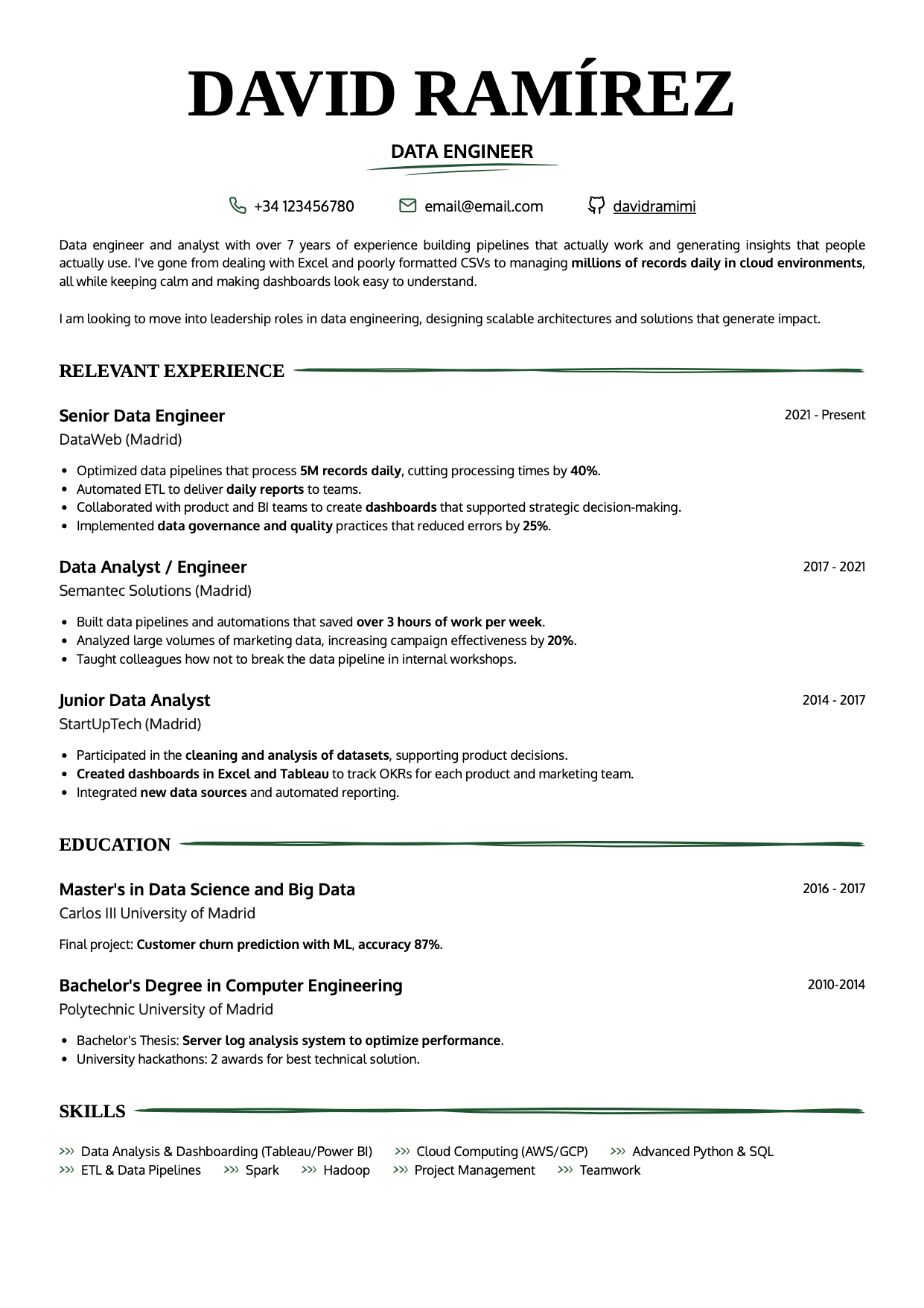
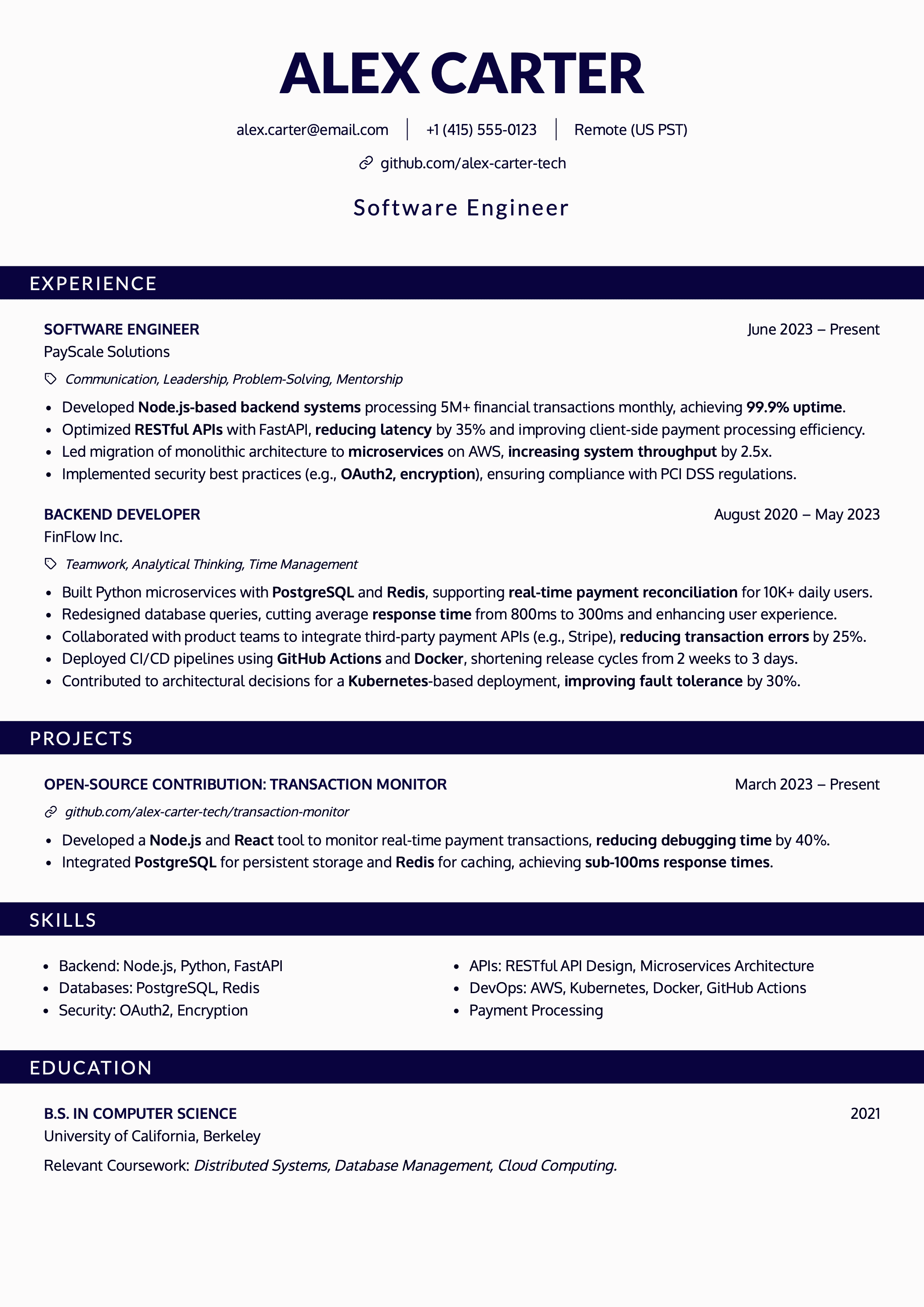
Harvard-style resume templates
Some formats work because they read like a familiar profile: fast, predictable, easy to scan. They work particularly well for technical roles or people without work experience.
 |
 |
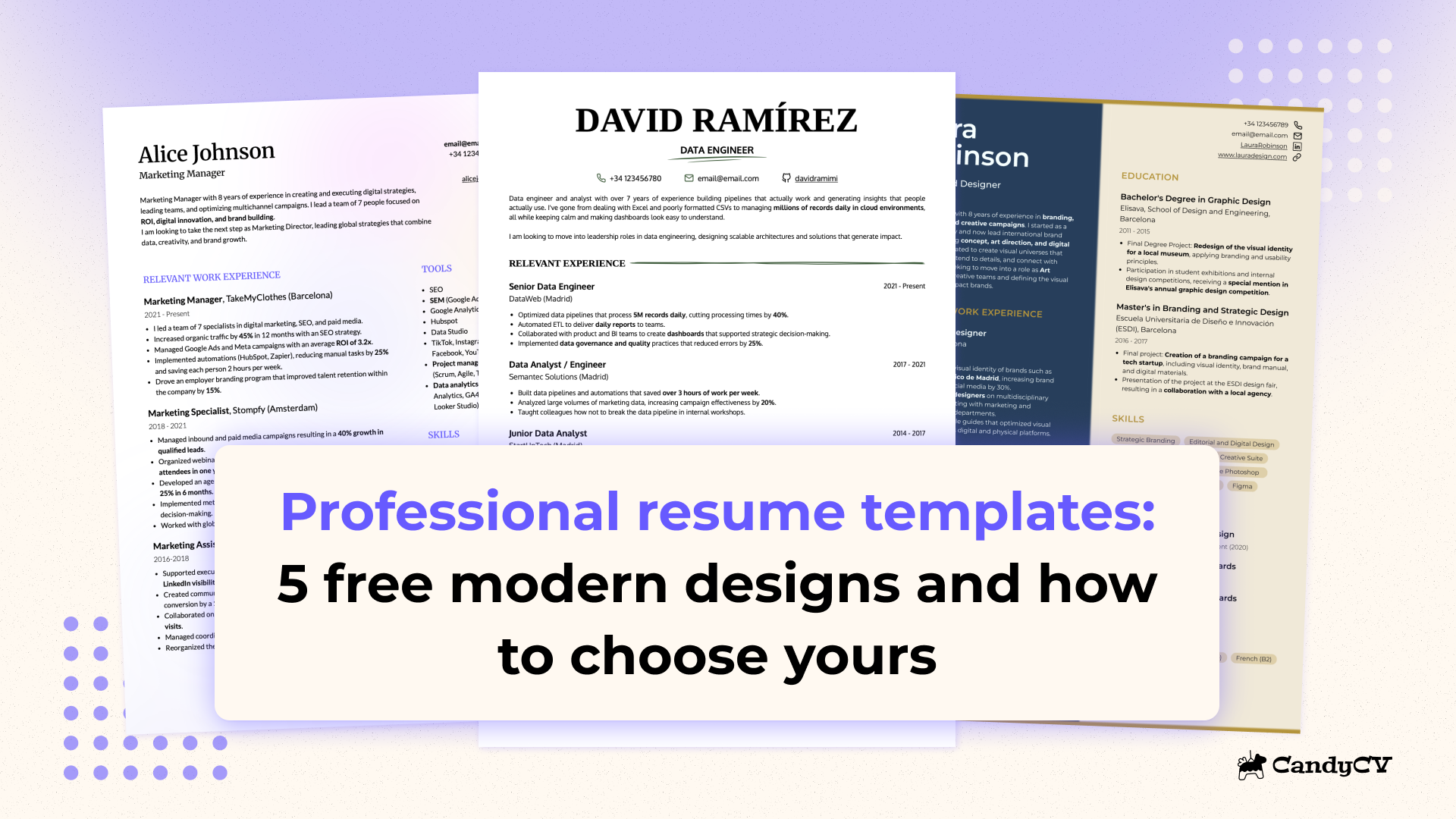
Professional resume templates
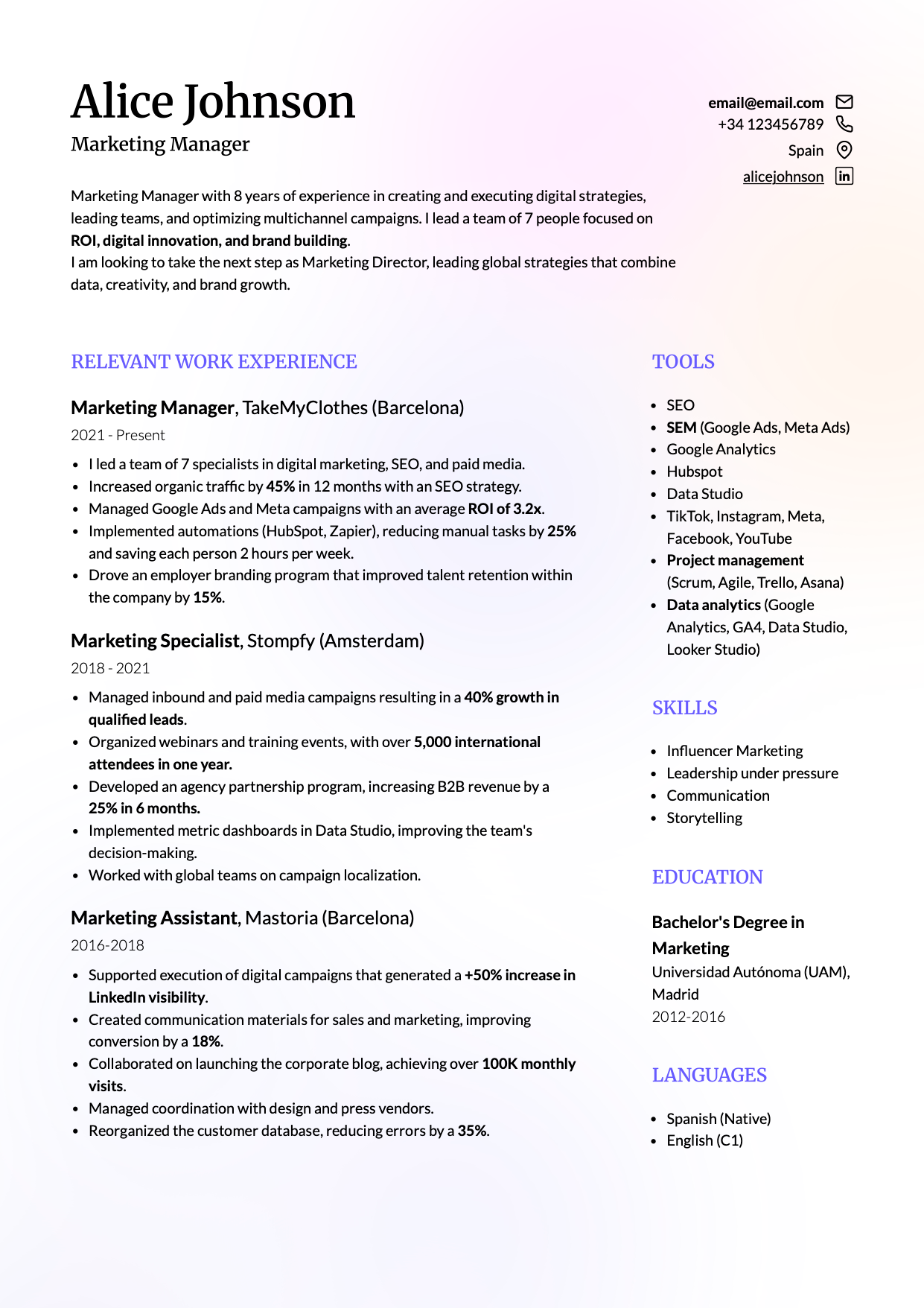
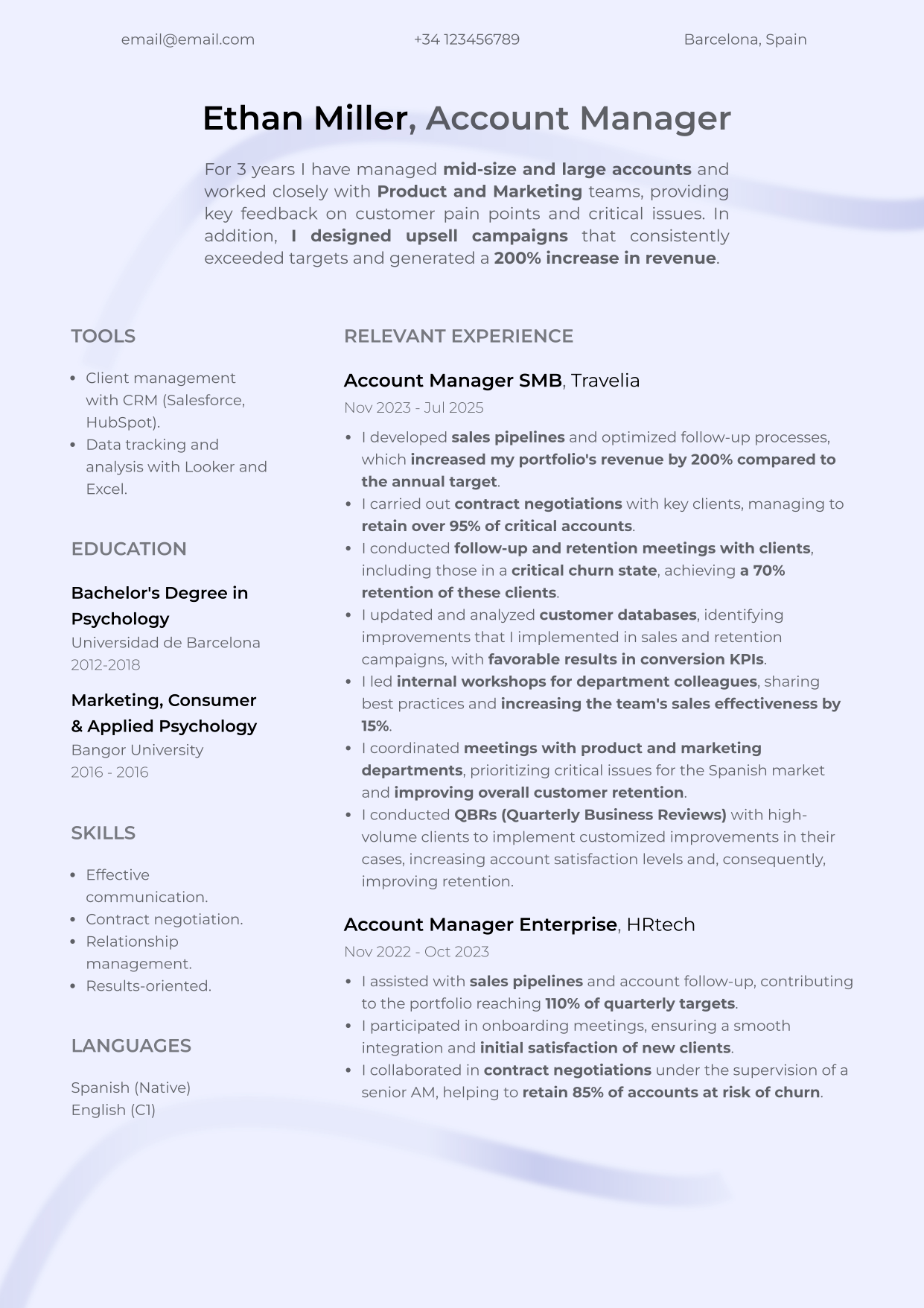
You can build a modern resume and download it as a PDF (free). Templates should be designed to work with hiring tech (ATS + job boards) and with human scanning.
 |
 |
A tool that makes tailoring fast
If you’re applying to multiple roles, the bottleneck isn’t “having a resume.” It’s tailoring fast so you send stronger fit signals every time.
For a direct comparison of dedicated alternatives, see our analysis of the best resume builders.
And if your backup plan is Canva/Word templates without thinking about ATS/scanning, read these first:
- Don’t build your resume in Canva.
- Review how to make a resume in Word with strategy and what mistakes to avoid.
What recruiters really think about Europass resumes
Recruiters and hiring professionals have criticized Europass for years. They describe it as “too long,” “hard to read,” “visually poor,” and even as something that undermines candidates’ profiles rather than strengthening them.
Worse, using Europass might signal the wrong things:
- That you’re out of touch with current hiring standards.
- That you didn’t take the time to stand out.
- That you’re going for the easiest route, not the most effective one.
What do top recruiters look for in a resume in 2026?
- Tailoring: aligned with the job and company.
- Conciseness: short, sharp, focused on results.
- Visual impact: clear structure and strong design.
- ATS compatibility: tech-friendly layout and formatting.
- Storytelling: shows your “why” and your impact.
- Cross-channel presence: connects with your LinkedIn, portfolio, or website.
- Quantified results: numbers, outcomes, tangible achievements.
- Personality: highlights how you work and what makes you unique.
Final thoughts: you can’t standardize what needs to be unique
Europass started with a legitimate mission: make skills and experience easier to compare across Europe.
But what used to be an advantage (standardization) becomes a disadvantage when you need to earn attention in seconds, communicate value from line one, and differentiate.
Europass still has a place in academic and institutional contexts. But if your goal is to compete in modern private-sector hiring, you’ll usually do better converting that content into a targeted, modern resume.
If you want to get out of the Europass loop and build a resume that works in modern hiring, start fresh or migrate your content in CandyCV.
Europass CV: Frequently Asked Questions (FAQs)
What is the Europass CV for?
It’s a standardized CV format used within the Europass ecosystem to support learning and working in Europe, especially when comparability matters (institutions, mobility programs).
Is the Europass CV ATS-friendly?
In theory, a clear structure helps. In practice, ATS outcomes depend on how the document is exported and formatted, how long it is, and whether key signals are easy to extract and find. If your resume is hard to parse or skim, you can lose ranking and attention.
When is it okay to use a Europass CV in 2026?
Most often in:
- EU mobility programs (Erasmus+, scholarships).
- academic/institutional processes.
- cases where the organization explicitly requests Europass.
For most private-sector roles, it’s usually not your strongest option. The best alternative is CandyCV.
How long should a resume be?
Keep it concise and scannable:
- 1 page: ideal for juniors or anyone with few years of experience.
- 2 pages: for senior profiles, tech roles or leadership positions.
- 3+ pages: only if you’re in academia or research, and even then, only if structured clearly.
The problem with Europass is that it makes it hard to keep things tight and relevant, which can instantly hurt your chances.
Is Europass a good idea for private-sector jobs?
Not really. It can send the wrong message:
- That you’re unfamiliar with today’s hiring expectations.
- That you didn’t put effort into crafting your application.
- That you’re lacking clarity or visual judgment.
And that’s the opposite of what you want to convey.
Where do I get the official Europass template?
From the Europass platform itself. If you’re using it to satisfy an institutional requirement, use the official route. If you’re trying to win interviews in private-sector hiring, consider a modern alternative such as CandyCV.
Can I use a Europass CV to apply for jobs in the US?
You can, but it’s usually a bad tradeoff. Most US recruiters and hiring systems expect a standard US resume: a tight summary, a skills section (when relevant), and work experience written in clear, impact-first bullet points. Europass can look unfamiliar and overly form-like, and it often makes it harder to lead with your strongest signals for the role. If you’re applying in the US, default to a US resume format such as the ones you can build in CandyCV.
What’s the best resume format if I’m applying to Europe?
Start with a clean, ATS-friendly resume format that lets you tailor quickly: clear headings, simple layout, and role-relevant skills + achievements surfaced near the top. If the job posting or institution explicitly asks for Europass, use it as the “compliance” version, but consider sending a second, more targeted resume with CandyCV too. The key is matching the local expectation without sacrificing clarity and impact.