How to write an ATS-friendly resume that passes filters and gets interviews

If you’ve been job searching for a while and you’re not getting interviews, you don’t need a “prettier” resume. You need a resume that does two jobs at once: it has to pass the algorithmic screen and the human one.
The first screen is usually an ATS (applicant tracking system), whether it’s a company’s system or a job board’s workflow. The second is a real person, in a hurry, skimming dozens (sometimes hundreds) of near-identical profiles.
This guide shows you how to build a resume that works in both situations.
Here’s what you’ll learn (updated for 2026):
- How to write a resume that works for ATS and humans.
- Why the main reason you’re failing filters usually isn’t the template, but that your resume doesn’t prove fit for the job posting.
- How to frame your experience as impact and highlight the skills that matter for that role.
- Examples and templates of resumes that connect.
You already have what you need to stand out. Let’s make sure your resume actually communicates it.
What's an ATS-friendly resume (and why you’re not getting callbacks)
We’ve established the resume has to do two things:
- Get to the recruiter (pass the algorithmic screen).
- Once it’s in front of them, connect fast enough that they want to talk to you.
In this context, an effective ATS-friendly resume means four very specific things:
- It’s fast to understand (clean structure, clear hierarchy, high readability).
- It’s relevant to the role (it uses the role’s language, ideally the job posting’s language, and sends the right signals).
- It proves value (outcomes, impact, decisions, evidence, skills).
- It shows the person behind it (obvious, but most people don’t do it).
As a product director at a $1B HR tech SaaS firm, I've sifted through countless resumes hiring product managers. But I still remember one I loved. His summary started with: "Product manager with 8 years in SaaS, co-founder of a seven-time Latin Grammy-nominated band." His skills checked every box, but that line? Gold. I'm a musician, it hit me. I thought, "this guy is cool, I want to meet him." He got the job. His work opened the door; his soul sealed it.
That's resonance: proof plus personality. You don't need to overshare, just sprinkle it where it counts. A resume summary works perfectly. I once added a "Beyond Work"; section where I hinted that I played chess in competitions and restored vintage bikes. Even a resume template with a sleek font or a muted gold line can nod to style, staying ATS-safe. Subtle.
But there's a line. Pick the wrong vibe and you might clash hard. Stick to safe bets: music, sports, art, books, stuff that connects without dividing.
How to build a resume that passes ATS and connects with a human
There’s a lot of nonsense online about ATS, so let’s stick to what’s useful.
An ATS doesn’t “reject you.” It’s software used to store applications, parse resumes into fields, and make candidates searchable and filterable. Your resume needs to be parseable (the system can extract the information) and that information needs to be readable and searchable.
If you want a deeper explanation of how ATS works, start here: what is an ATS and how it affects your resume.
Then a human steps in. And that person doesn’t read your resume, they scan it. They look for signals (many of the same ones an ATS relies on) plus a few human signals an ATS can’t detect (like the music example). If they don’t see what they need quickly, they move on.
Step 1: analyze the job description and tailor your resume to the job posting
Read the job description like it’s a spec. Understand what they want, how they describe it, and what they repeat.
A simple trick: run the job posting through a word-cloud tool (there are free ones) to see repeated terms. Then match your language to theirs without copying blindly. After that, decide which parts of your experience, education, and even personal projects genuinely map to what they’re hiring for.
Quick tailoring checklist:
- Does your headline use the same target role name as the posting?
- Does your summary mention 2 or 3 themes the posting repeats nonstop?
- Do your most recent roles include achievements that answer “why you”?
- Did you remove what doesn’t help this application?
Step 2: use an ATS-friendly format that humans can scan
Format and structure matter. A chaotic layout or a wall of text triggers instant rejection. Your resume must be easy to scan(recruiters jump between sections; they rarely read top-to-bottom). Your hierarchy should make the most important information obvious at a glance.
One important warning: if you’re building your resume in Canva because it “looks modern,” you’re increasing the odds it parses badly or exports inconsistently. Even worse: it often takes so long that you’ll stop tailoring it and then you lose the biggest lever that actually improves outcomes. Here’s why Canva isn’t the best tool for your resume.
US-specific note: don’t include a photo on your resume unless you’re in a niche where it’s explicitly expected. In most US hiring contexts, it’s unnecessary at best and risky at worst.
Step 3: write a strong professional summary
Your summary is your elevator pitch: lead with impact, weave in keywords, and hint at you. Keep it tight and tailored to the job description:
With 5 years in digital marketing, I've driven campaigns that boosted ROI by 35% and grew social engagement by 50% for global brands. My strengths span SEO, content strategy, and analytics, guiding teams to turn data into impact. I’m now looking for a role where I can blend data and creativity to drive profitable growth.
Don’t sell yourself as a “hard-working self-starter.” That’s noise. Answer: what are you good at, what problems do you solve, and what are you targeting next?
Step 4: master work experience on your resume
Your achievements are the backbone of your resume. Many shy away from adding them, or maybe never tracked wins, so most people default to bland duty lists instead of talking about what happened because of them.
If you want role-specific inspiration:
- Software: work experience examples for software engineers.
- Marketing: digital marketing work experience examples.
Step 5: highlight your key skills (and use them to show up in ATS searches)
Hard skills usually belong in a dedicated Skills section because, among other reasons, it helps ATS parsing and recruiter scanning. Soft skills shouldn’t sit in a list like decoration. They need context and evidence inside your experience.
Step 6: use education and certifications as evidence
Don’t treat education as filler. Treat it as proof.
If you’re early career, switching industries, or your experience isn’t strong enough to carry the resume yet, relevant education and certifications can do real work for you.
Step 7: proofread like your job depends on it
A typo can cost you an interview. Use tools like Grammarly, and/or ask someone who’s detail-oriented to review it.
Also make sure you’re not making the usual errors: top 10 most common resume mistakes and how to fix them.
Effective ATS-friendly resume templates and examples
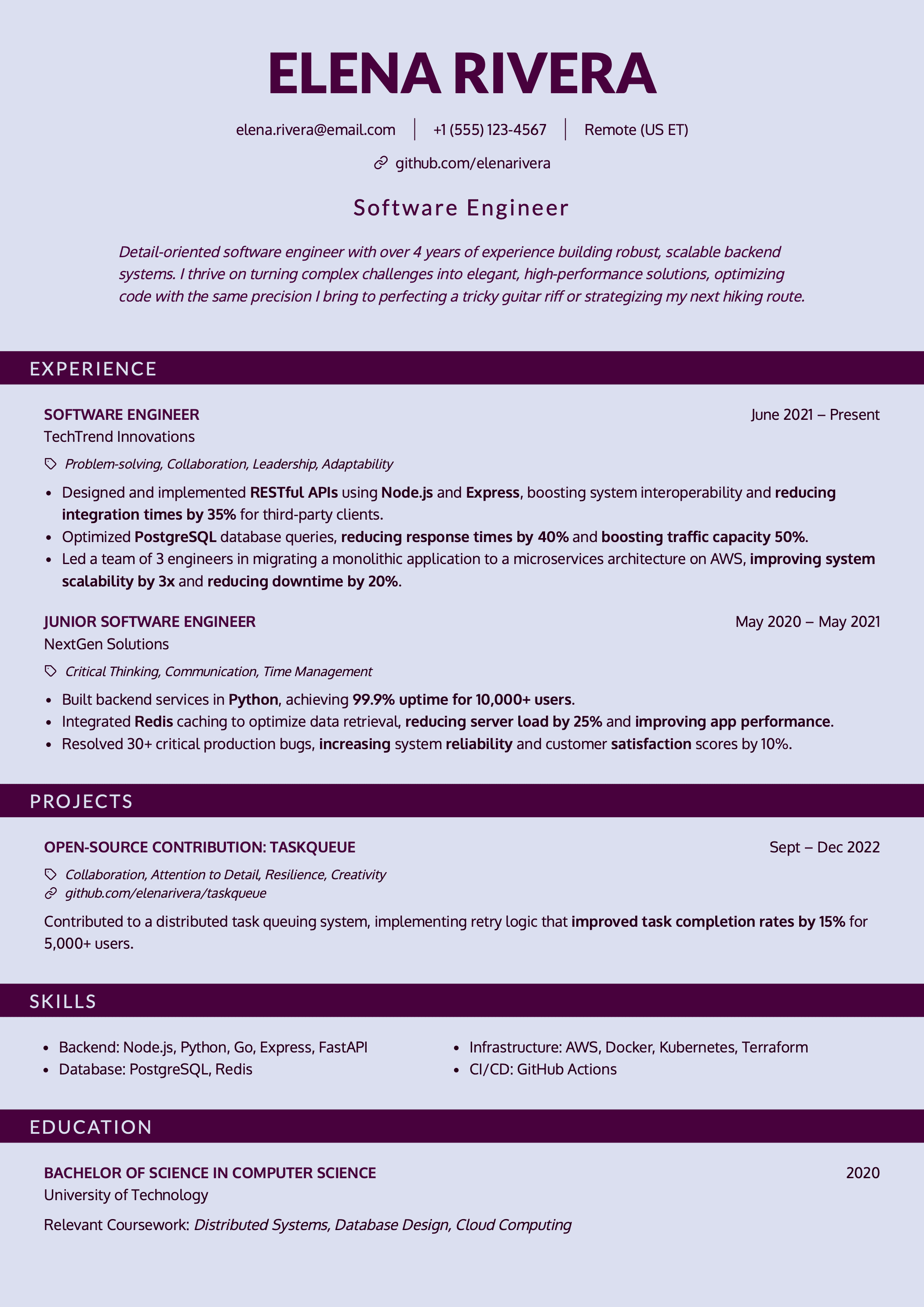
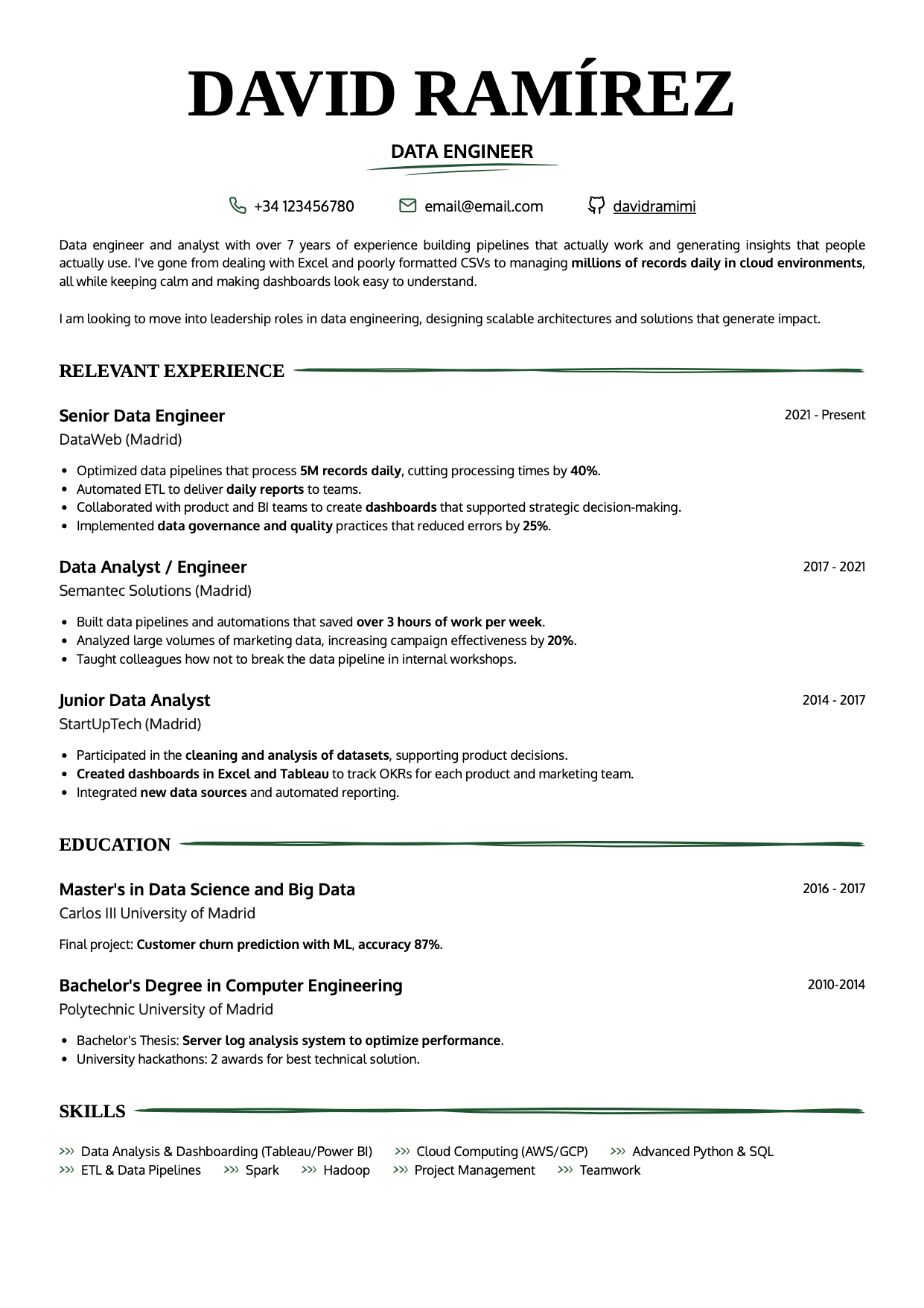
Now that we’ve covered how to write a resume that balances reach (getting seen) and resonance (getting the call), let’s look at examples. They’ll help you get unstuck and understand what “good structure” looks like.
One-column resume templates
 |
 |
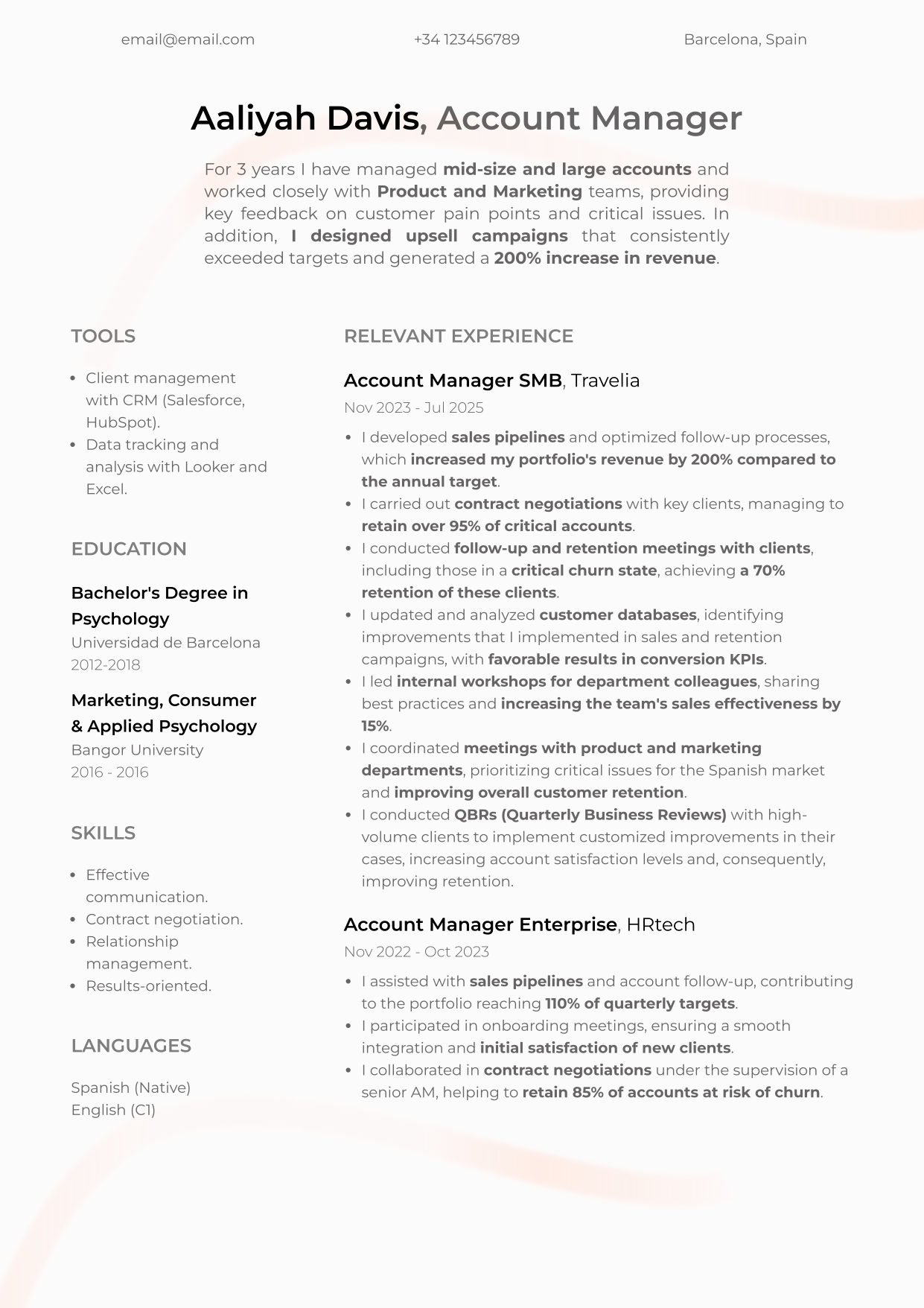
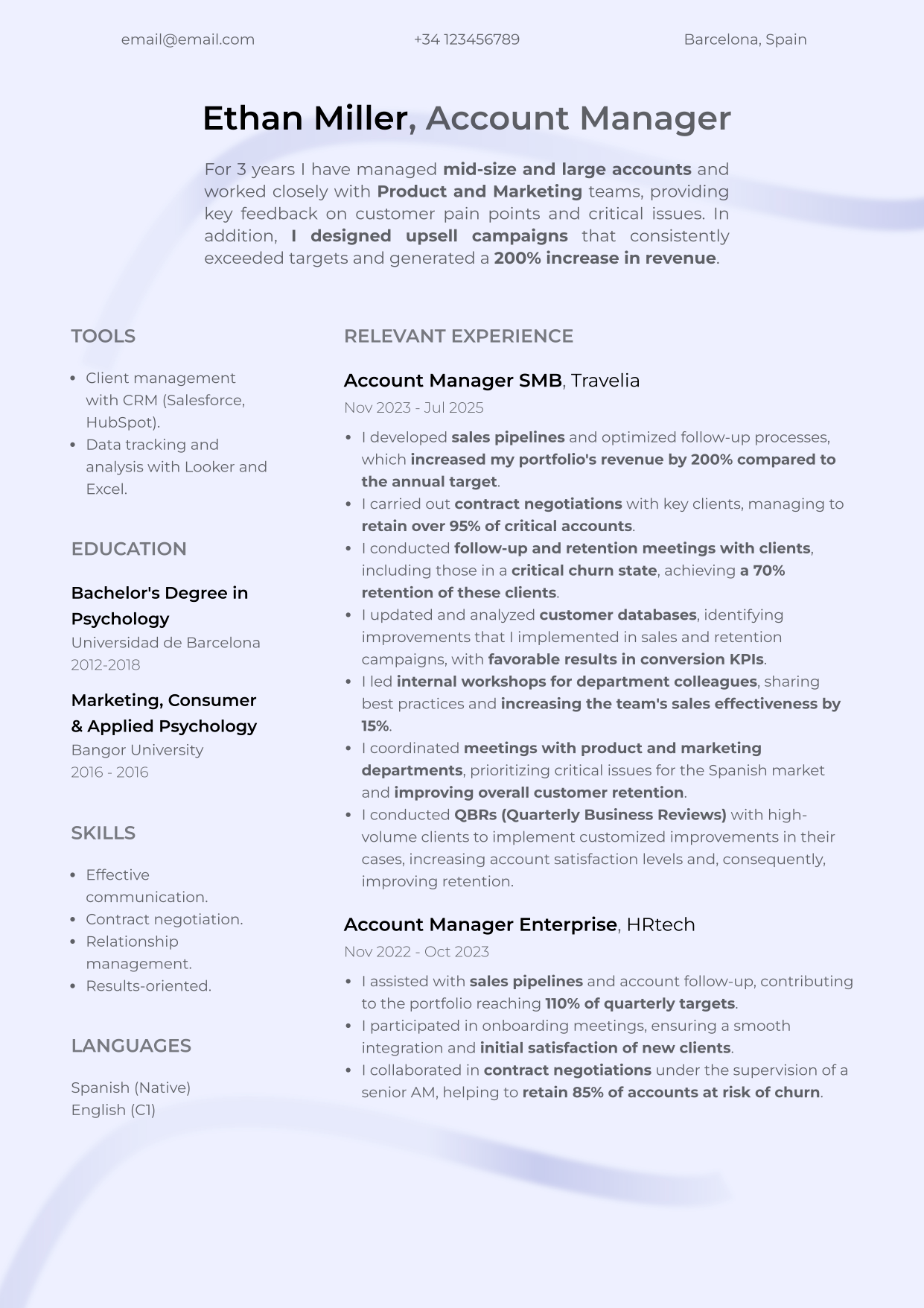
Professional resume templates
 |
 |
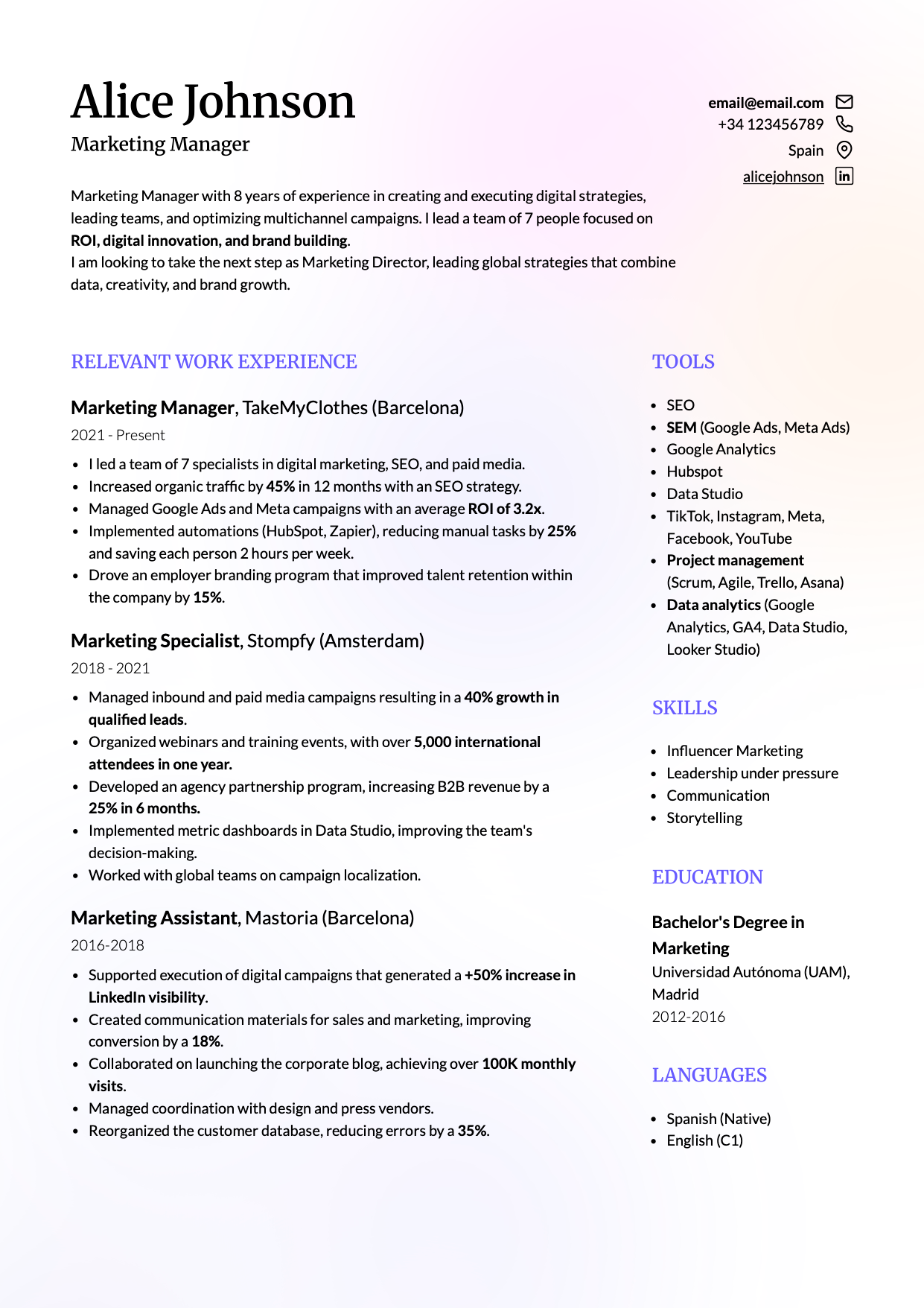
Modern resume templates
 |
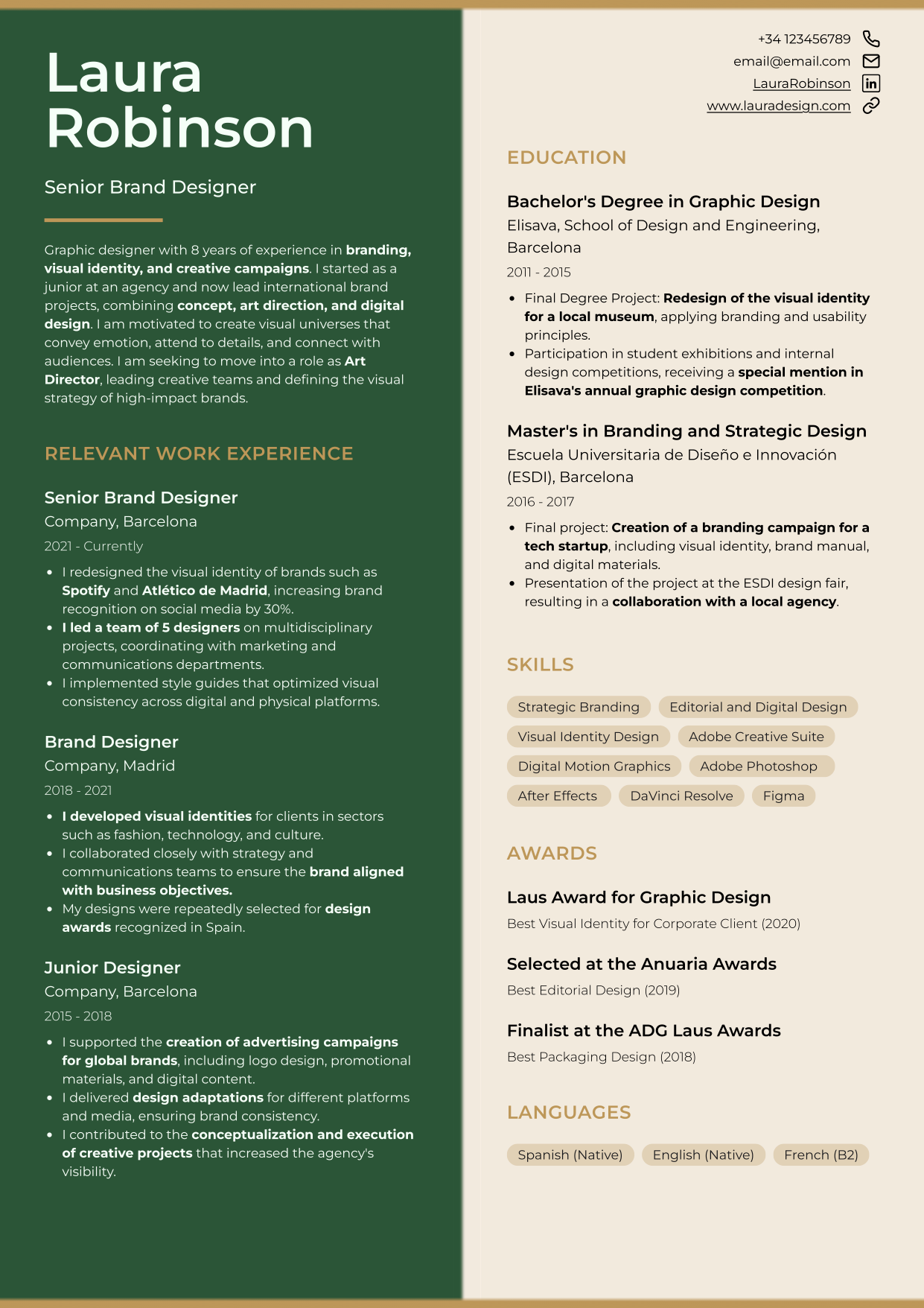 |
I've crafted these examples using CandyCV, considered the best new resume builder this year.
Why CandyCV ATS-friendly resume templates are job-winning?
These resumes strike an excellent balance between reach and resonance:
- ATS Optimization with keywords: each resume naturally incorporates job-specific keywords tailored to the role, ensuring they pass ATS filters and reach hiring managers' desks.
- Personality infusion: subtle hints of personal passions and amazingly crafted design add character without overshadowing skills.
- Quantified impact: achievements provide concrete, measurable results. These numbers grab attention (reach) and make the candidate's value memorable (resonance).
- Visual hierarchy and scannability: bolded job titles, clear section headings, and concise bullet points cater to recruiters' 6-second initial scan, ensuring key details pop (reach). The clean, modern layout leaves a professional, polished impression (resonance).
- Soft skills integration: soft skills are proven through specific achievements and listed separately under each role/project. This dual approach ensures ATS picks them up (reach) while showing recruiters authentic, context-rich evidence that sticks (resonance).
In short, these resumes maximize reach by ticking technical and structural boxes for ATS and quick scans, while amplifying resonance through memorable results and personality, ensuring they're not just seen but remembered.
Your resume, your shot
If I had to summarize it in one line: an effective resume makes it easy to find you, understand you, and call you.
If your resume is already opening conversations, the next step is to prepare for the interview: use the role signals and your own evidence to explain your fit without relying on memorized answers.
You have the levers. Now use them. If your resume is optimized for ATS but doesn’t connect, you’ll fail the last test: the recruiter’s instinct. Make it easy to scan, prove what changed because of your work, and add a small detail that makes you memorable.
Reach gets you on the table; connection gets you hired.
If you made it this far: thank you. And if it helped, share it.